Drywood vs. Subterranean Termites: How to Tell Them Apart
Drywood vs subterranean termites isn’t trivia. It’s the first question of every termite job, because the two species live in different places and die by different methods. Guess wrong and you can pay for a treatment that never touches the colony.
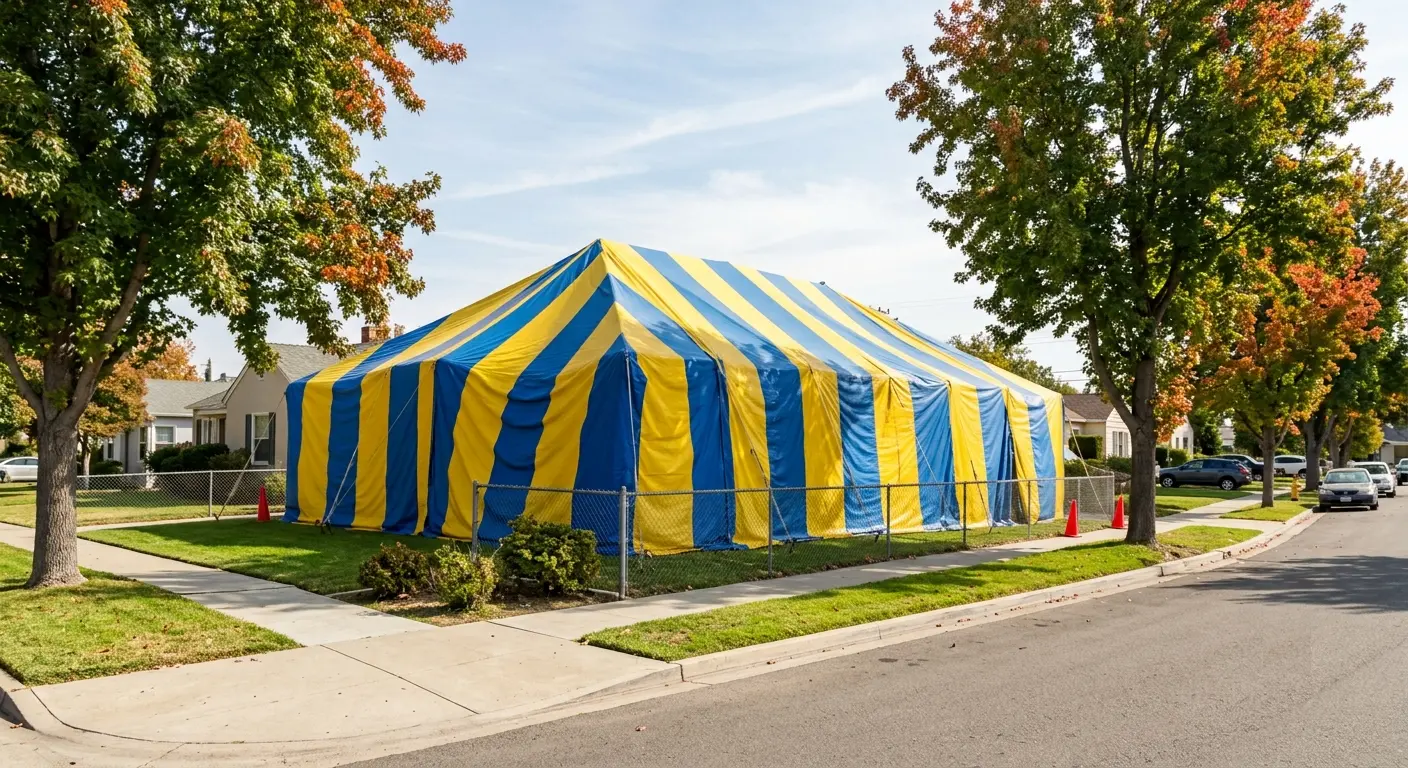
The mismatch runs both directions. Tent a house for what turns out to be subterranean termites, and the colony in the soil outside never meets the gas. Trench a soil barrier for what’s actually a drywood infestation in the attic, and the termites upstairs never walk through it. Each treatment is built around one species’ biology: subterranean work happens at the ground, drywood work happens in the wood.
The good news is that the two leave different fingerprints, and you can often make a confident first guess from your own evidence. Start with the table below, check it against the full list of termite signs, and let an inspection make it official before money changes hands. The stakes justify the ten minutes: in Bakersfield both species are common enough that neither can be assumed, and the treatments they call for don’t overlap at any point.
The identification table
- Where they live
- Inside the wood itself
- The evidence
- Pellet piles under kick-out holes
- When they swarm
- Late-summer and fall heat
- Where they live
- Colonies in the soil
- The evidence
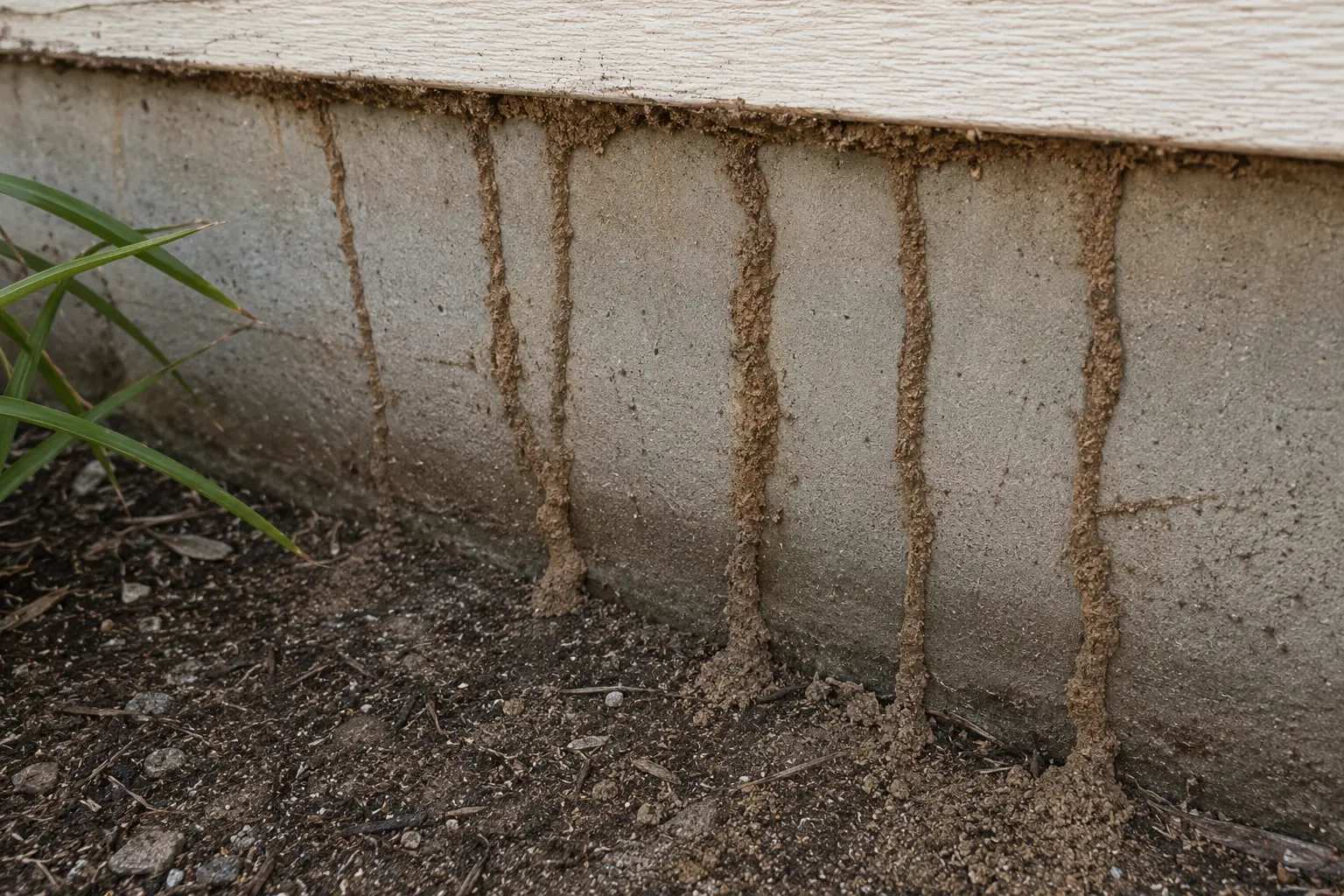
- Mud tubes up foundations
- When they swarm
- Warm days, often after rain
| Species | Where they live | The evidence | When they swarm |
|---|---|---|---|
| Drywood | Inside the wood itself | Pellet piles under kick-out holes | Late-summer and fall heat |
| Subterranean | Colonies in the soil | Mud tubes up foundations | Warm days, often after rain |
Drywood termites: the colony in your rafters
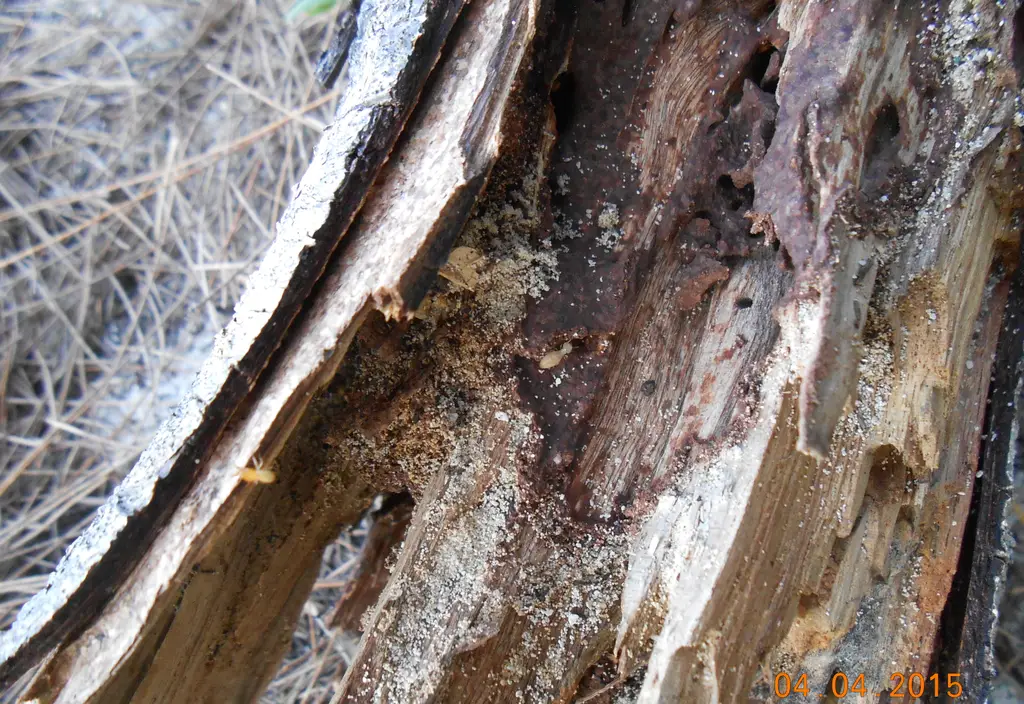
Drywood termites live their whole lives inside the wood they’re eating. No soil contact, no moisture supply, no tubes. A colony starts when a pair of swarmers finds a crack in dry wood, seals itself in, and spends years quietly expanding through the grain.
That biology explains their calling card: frass. The colony pushes its waste pellets out through pinholes called kick-out holes, and the pellets pile up below like coarse ground pepper. Sweep the pile away and it returns. That refill is the diagnostic. Look closely at a pellet and you’ll see it’s hard, dry, and six-sided, nothing like the soft fluff of real sawdust, and nothing like the mud subterranean termites leave on everything they touch.
In Bakersfield homes they favor the dry, sun-warmed wood up high: attic framing, eaves, fascia boards, garage door frames, and window headers. Colonies stay smaller than subterranean ones and work slower, which buys time but also lets them go unnoticed for years. Treatment ranges from targeted no-tent work up to whole-structure methods, and the spread of the galleries decides which.
Still not sure which you have? The free inspection answers it with evidence.
Subterranean termites: the colony under the yard
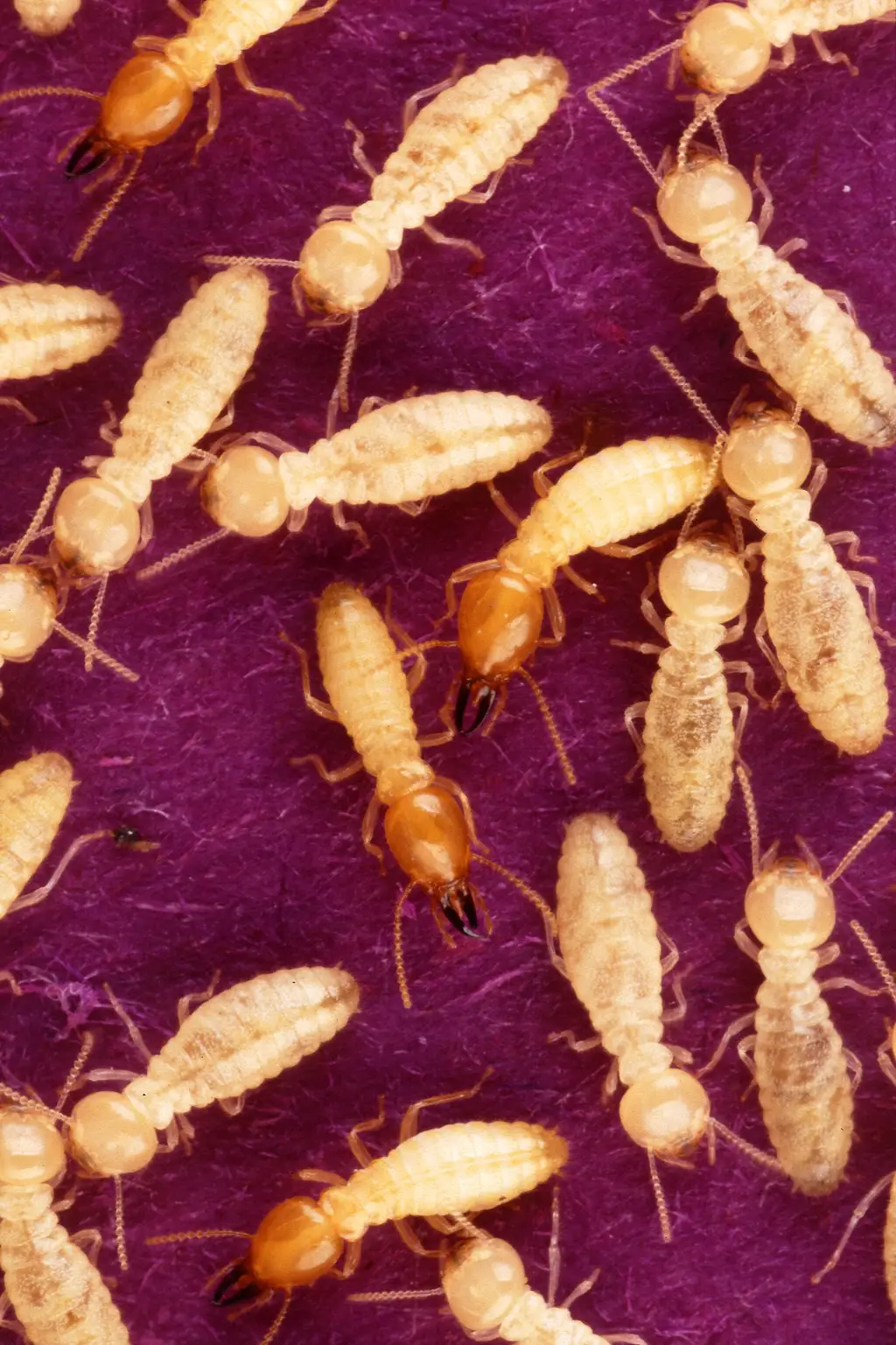
Subterranean termites live in the ground, in colonies that can run to the hundreds of thousands, and commute to your house for food. They dry out in open air, so they travel through soil and up the mud tubes they build on foundations and piers. Find a tube, and you’ve found their highway. Everything they touch carries that soil signature too: mud packed into damaged wood and mud lining the galleries, where drywood termites leave clean tunnels and dry pellets.
They need moisture, and Bakersfield hands it to them. The valley soil would be hostile through a rainless summer, but irrigated lawns and drip lines keep the ground against foundations damp all year. That’s why subterranean termites, not drywood, dominate local findings and account for most of the serious structural damage here. Bigger colonies, faster eating, and a food source they never have to leave.
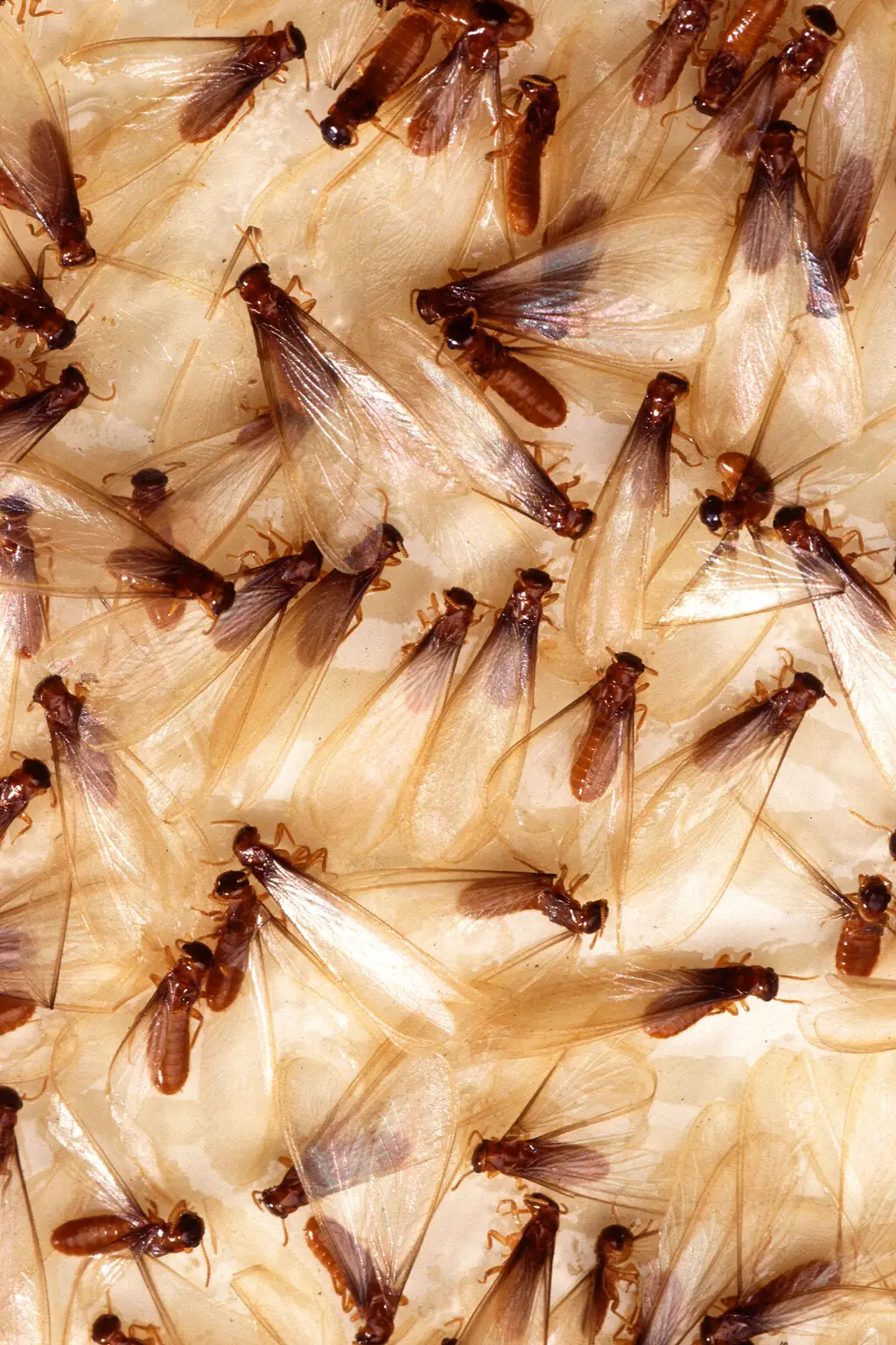
Timing separates the species too. Bakersfield’s subterranean swarmers fly on warm days in spring and again after the first soaking fall rains. Drywood swarmers wait for the late-summer heat, usually August into October. A swarm date is a real identification clue, and treatment at the soil line is the answer when the subterranean side wins.
Keep reading
-
7 signs of termites
The full evidence checklist, sign by sign, with what each one means.
Read more -
Tenting vs. no-tent treatment
If it's drywood, this is the decision you're headed for. Honest criteria for both.
Read more -
Termite swarm season in Bakersfield
When each species flies here, and what a swarm actually means.
Read more