Tenting vs. No-Tent Termite Treatment: Which Do You Need?
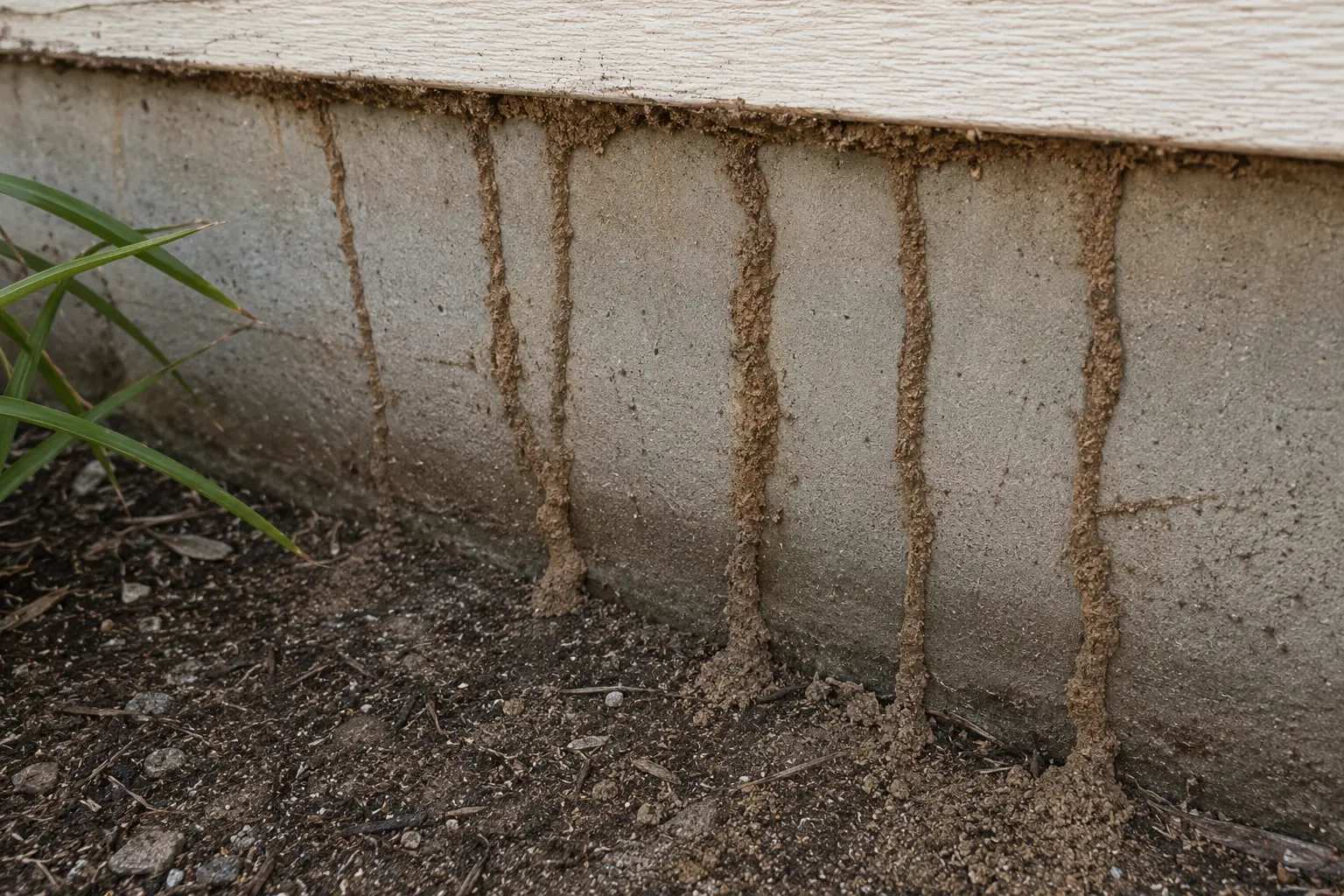
Tenting vs no-tent termite treatment is a real decision with an unpopular first rule: the choice only exists for drywood termites. Subterranean termites live in the soil, and no amount of gas inside a tent reaches a colony under the back lawn. If your evidence is mud tubes on the foundation, close this article. Your job happens at the ground, and neither of these options applies.
If the evidence is pellets and kick-out holes, the drywood kind, then the fork is genuine, and two things decide it. First, spread: is the colony in one section of eave, or turning up in rooms at both ends of the house? Second, access: can a technician physically reach the galleries, or do they run through framing that’s buried behind stucco and tile?
Confined and reachable points to no-tent local treatment. Widespread or unreachable points to whole-house fumigation. Every honest recommendation is some version of those two sentences. The trouble is that companies tend to quote whichever one they’re set up to sell, which is why it pays to understand the criteria before the bids arrive.
Neither answer is “better” in the abstract. A tent on a one-window infestation wastes money and three days of your life. Spot work on a whole-roofline infestation wastes money slower, which is worse. The only wrong choice is the one made before the evidence was in, so treat the inspection as step one of the decision, not a formality after it.
The two paths, side by side
- Coverage
- Every board in the structure
- Time out of house
- Two nights
- Prep
- Bag food, gas shutoff, plants trimmed
- Coverage
- Only the galleries treated
- Time out of house
- None
- Prep
- Clear access to the spots
When tenting is the right call
Tenting earns its disruption in one situation: drywood termites you can’t fully find or fully reach. Pellets in the master bedroom and the garage. Swarmers from the hallway ceiling. Galleries that disappear into a wall cavity or under a tile roofline. Each new spot is proof there are others you haven’t seen, and gas is the only tool that doesn’t care. It fills every void in the structure and kills the colonies nobody found.
The math matters too. One thorough job can cost less than a string of spot treatments that chase the same infestation around the house for two years. Paying twice for the same termites is the outcome tenting exists to prevent.
Age of the infestation weighs in as well. Drywood colonies grow slowly, so a house showing heavy evidence in several rooms has usually been hosting them for many years. Long-established infestations tend to have satellite colonies from past swarms, exactly the hidden pockets spot tools miss and gas doesn’t.
There’s a second whole-structure option worth naming. California formally recognizes both fumigation and heat for drywood work, and heat treatment gets to the same goal without chemicals and without the second night away. It has honest limits in dense construction, but for the right house it’s a genuine alternative, not a consolation prize.
The inspection decides this question. Schedule the free one before anyone quotes a tent.
When no-tent work is genuinely enough
Skip the tent when the infestation is confined, accessible, and traceable. The classic case: pellets under one window header, galleries confirmed with a probe, no other evidence anywhere after a full inspection. Foam injected into that gallery network kills that colony, the frass stops, and the follow-up check confirms it. Done in an afternoon, nobody leaves the house.
The guardrail belongs in bold: spot treatment protects nothing beyond where it’s applied. It’s a rifle shot, not a vaccine. The untreated framing across the house is exactly as edible as it was before, and a second colony three rafters over doesn’t notice what happened to the first one.
So the honest qualifier for no-tent work is confidence in the map. If the inspection traced everything and everything is reachable, local treatment is the right money, and the no-tent treatment page covers what the visit looks like. If the map has question marks, spend your money on certainty instead. A tent with nothing left to find beats foam with your fingers crossed.
One more point in no-tent’s favor when it fits: it leaves a monitoring baseline. Treated galleries go quiet, old pellet piles get cleaned up, and from then on any fresh pellet anywhere in the house is a clean, unambiguous signal. Small infestations caught and killed early are how houses avoid ever needing the tent conversation again.