Termite control in Bakersfield, done in the right order
Drywood and subterranean termites found, treated, and the damage repaired, starting with a free inspection and a written report.
Bakersfield has both kinds of termite. Subterranean colonies live in the soil, kept comfortable all year by the lawn watering that survives our 100-degree summers, and climb into houses through mud tubes on foundations and piers. Drywood termites fly in on hot late-summer evenings and set up in attic framing, eaves, and fascia. Two different insects, two completely different fixes.
That’s why everything here starts with a free termite inspection instead of a quote. The species and the spread decide the method. A company that leads with a tent, or a spray can, before anyone has identified what’s eating the house is guessing, and the guess costs the same as an answer.
The inspection itself is straightforward. A licensed inspector works through the attic, the crawl space or slab edges, the garage, and the exterior wood, then puts the findings in writing. If the house is clean, the report says so, and you’ve spent nothing but an hour.
Once the report names the problem, treatment is matched to it: soil barriers or baiting for subterranean colonies, spot treatment through whole-house fumigation for drywood, depending on how far things have gone. And when termites have already done visible harm, wood repair follows treatment, so the house ends up sound, not just termite-free.
Inspection, report, treatment, repair. In that order, every time, because each step only makes sense with the one before it.
Our Services
-
Termite Inspections
A trained inspector checks the attic, crawl space, eaves, and foundation, then tells you plainly what's there.
Learn more
-
Termite Treatment
Spot treatments, soil treatments, and whole-structure options, recommended based on what the inspection actually finds.
Learn more
-
Whole-House Fumigation
Tent fumigation reaches drywood termites everywhere in the structure. It's the thorough fix for widespread infestations.
Learn more
-
No-Tent Drywood Treatment
Targeted drywood treatment without the tent. When the infestation is accessible, you stay in your home while we work.
Learn more
-
Subterranean Termite Treatment
Soil-dwelling colonies stopped at the ground they come from, with liquid barrier and baiting treatments.
Learn more
-
Heat Treatment
Whole-structure or single-room heat that kills drywood termites without fumigant chemicals or an overnight stay elsewhere.
Learn more
-
Escrow & WDO Inspections
Wood-destroying organism reports for home sales, documented and delivered to everyone in the transaction.
Learn more
-
Termite Damage Repair
Damaged framing, eaves, fascia, and trim repaired once the termites are gone.
Learn more
Two termites live here, and they're treated two different ways
- Where they live
- Colonies in the soil
- The evidence
- Mud tubes on foundations
- The fix
- Treatment at the soil line
- Where they live
- Inside the wood itself
- The evidence
- Pellet piles under small holes
- The fix
- Spot work up to fumigation
| Species | Where they live | The evidence | The fix |
|---|---|---|---|
| Subterranean | Colonies in the soil | Mud tubes on foundations | Treatment at the soil line |
| Drywood | Inside the wood itself | Pellet piles under small holes | Spot work up to fumigation |
How termite work usually runs
- 1
Inspect
A licensed inspector checks the whole house, from attic framing to crawl space, at no charge.
- 2
Report
Findings go in writing: the species, where the activity is, and what it means.
- 3
Treat
The method matches the termite, whether that's spot work, soil treatment, heat, or a tent.
- 4
Follow up
Re-checks confirm the colony is gone, and periodic inspections keep it that way.
Buying or selling a home? WDO reports and clearances run on escrow's clock, not the termites'.
Why the inspection comes before the quote
Termite treatments aren’t interchangeable, and the price gaps between them are big. Spot-treating one window frame and tenting a whole house are different jobs by an order of magnitude. So the only quote worth your attention is one built on a written finding: this species, in these locations, this far along. Anything else is a number pulled from the air, and homeowners who collect two or three air-numbers quickly notice they don’t agree.
The inspection-first sequence protects you in a second way. It separates the diagnosis from the sale. When the report says the drywood activity is confined to one eave, spot work is the honest recommendation, even though the tent would have been the bigger ticket. Around here that distinction matters constantly, because Bakersfield’s mix of old raised-foundation neighborhoods and newer slab tracts means the right answer genuinely changes from street to street.
A written report also travels well. You can hand it to a second company for a competing bid, keep it as a baseline for next year’s check, or file it with the house records a future buyer will ask about. A verbal opinion does none of that.
Not sure which insect you even have? The drywood versus subterranean guide walks through the evidence. And when termites have already chewed through something structural, damage repair gets scoped from the same inspection findings, so the rebuild matches what was actually documented rather than a contractor’s guess.
What termite pressure looks like in this valley
Bakersfield shouldn’t be good termite country on paper. Six inches of rain a year, months of triple-digit heat, soil that bakes hard by June. The catch is that we water our way out of the desert, and the termites collect the subsidy. Every irrigated lawn, drip line, and flower bed against a stem wall keeps a band of soil damp through the driest August, and damp soil is all a subterranean colony asks of a neighborhood.
The housing stock sets the terms of the fight. In the older central neighborhoods, the craftsman and bungalow blocks around Oleander, Westchester, and downtown, homes sit on raised foundations over crawl spaces. Those piers are termite ladders, and the dark, humid space under the floor is where activity runs longest unseen. Most of the serious subfloor damage in town comes out of houses like these, found decades after it started.
The slab tracts that spread southwest and northwest from the 1970s on trade the crawl space for a different weakness. Tubes come up through settling cracks in the slab and around plumbing penetrations, inside the walls. The evidence shows up later and subtler: a blistered baseboard, a swarm from a floor register.
Drywood termites work the whole map, but they favor the older blocks, where original wood eaves and fascia have been curing in the sun since Truman. Late summer through fall is their season here.
The most common calls, year in and year out: mud tubes spotted on a foundation, pellets in a garage or under an eave, and swarmers indoors after the first fall rain. Most turn out to be exactly what they look like. All three are worth a free look before they’re worth a worry.
Areas We Serve
- Bakersfield
- Oildale
- Shafter
- Arvin
- Lamont
- Taft
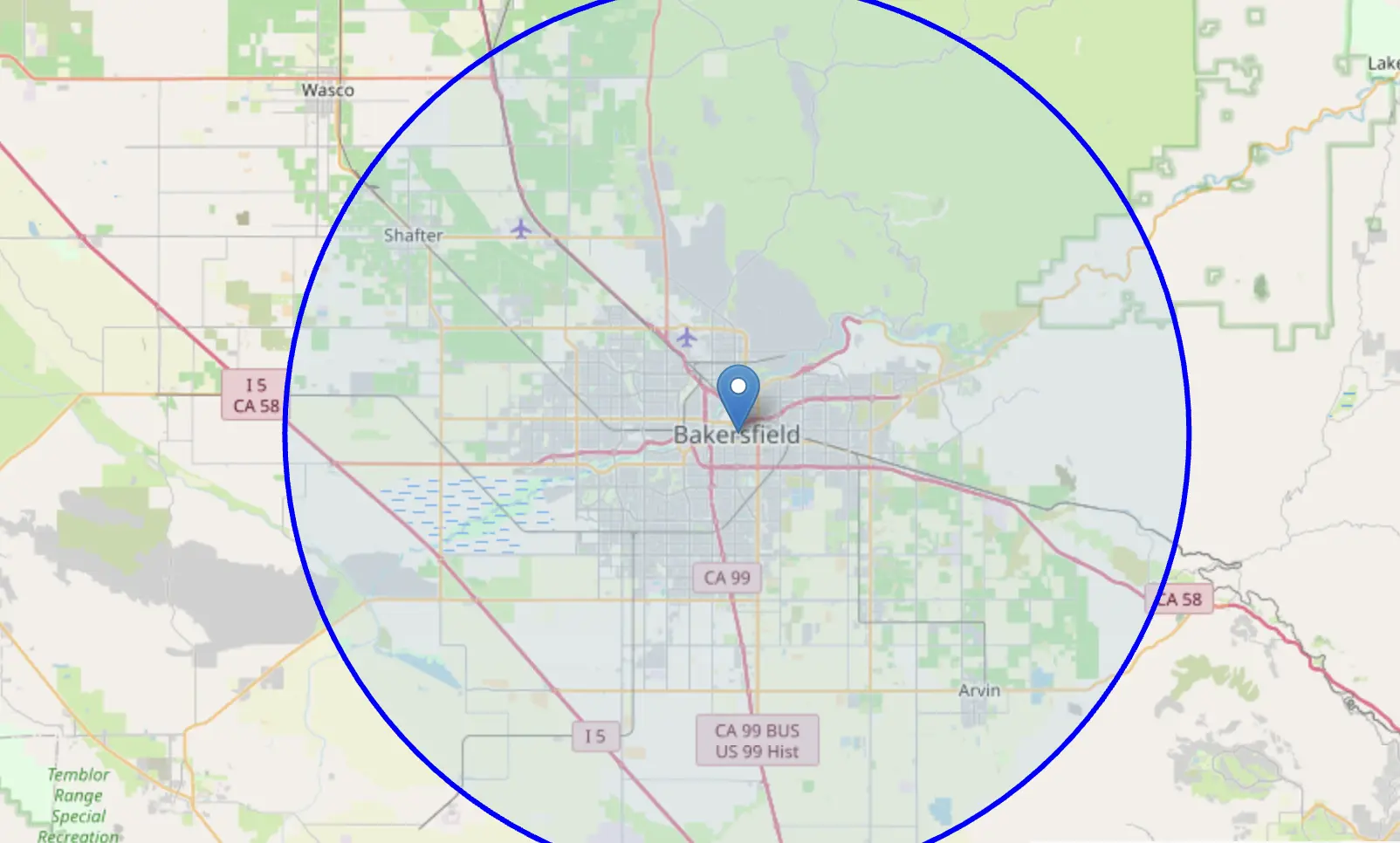
Find local details for each community on our service-area pages.
Frequently Asked Questions
How do I know if I have drywood or subterranean termites?
They leave different evidence. Subterranean termites live in the soil and build mud tubes up foundations and piers to reach wood. Drywood termites live entirely inside the wood and push out small piles of dry, pellet-like droppings called frass. The two are treated completely differently, which is why an inspection is the first step: it settles which one you're dealing with.
What does it mean if I see flying termites or piles of wings?
Winged termites, called swarmers, are how a mature colony spreads. A swarm indoors, or piles of identical shed wings on sills and floors, means an established colony is in or very near the structure. Of all the signs, this is the one worth acting on quickly.
Do I always need to tent my house for termites?
No. Tenting is for widespread or hard-to-reach drywood infestations. Subterranean termites are treated at the soil, never by tenting, and an accessible drywood infestation can often be treated locally without a tent. What your house needs depends on the species and how far it has spread, and that's what the inspection determines.
Does homeowners insurance cover termite damage?
Almost never. Insurers classify termite damage as preventable maintenance rather than a sudden event, so repairs usually come out of pocket. That's the practical argument for periodic inspections: catch activity early instead of discovering it during a remodel or a home sale.
What happens during a termite inspection?
An inspector goes through the accessible areas where termites show up first: attic, crawl space, garage, eaves and fascia, window and door frames, and the foundation perimeter. They're looking for mud tubes, frass, damaged wood, and swarm evidence. Findings go into a written report along with a recommendation, so you know what was found and what it means before any treatment decision.
How long does termite treatment take?
It depends on the method. Localized drywood treatments and liquid soil treatments are usually done in a day. Whole-house fumigation runs across three days: tenting, aeration, and a clearance check before re-entry. Heat treatments generally finish the same day.