7 Signs of Termites in Your Bakersfield Home
Termites don’t announce themselves. A colony can work inside a wall for years without a sound, which is why most infestations get found by accident, during a remodel or a home sale. The signs of termites in a Bakersfield house are quieter than people expect: seven specific things, most of them findable in an afternoon walk around the property.
Around here, the two signs homeowners actually report first are wings on a windowsill and mud tubes on the foundation or crawl-space piers. Frass, the pellet piles drywood termites leave, usually gets mistaken for sawdust a few times before anyone worries about it.
None of these signs means panic. Each one means evidence, and evidence is useful. It tells an inspector which species to suspect (the drywood versus subterranean question decides everything about treatment) and where to look. A free inspection turns a worrying sign into a written answer.
The seven signs, at a glance
-
Mud tubes
Pencil-width dirt tunnels climbing foundations, piers, or garage walls
-
Frass
Sawdust-like pellets that pile up again after you sweep them
-
Hollow-sounding wood
Trim or framing that thuds soft when tapped
-
Swarmers
Winged termites appearing indoors, often near windows
-
Discarded wings
Small piles on sills and in spiderwebs after a flight
-
Blistered paint and sagging floors
Surfaces deforming over galleries just underneath
-
Sticking doors and windows
Frames warped by damage or the moisture termites bring
Each sign, explained
Mud tubes. Subterranean termites dry out in open air, so they build covered highways of soil and saliva between the ground and your wood. Look along foundation stem walls, crawl-space piers, garage corners, and where patio slabs meet the house. A tube the width of a pencil is the classic find. This sign points to subterranean termites every time. If you want to know whether a tube is active, break out a small section in the middle and check it in a few days. Rebuilt means live traffic. Just don’t strip the whole thing, because an inspector can read a tube’s path.
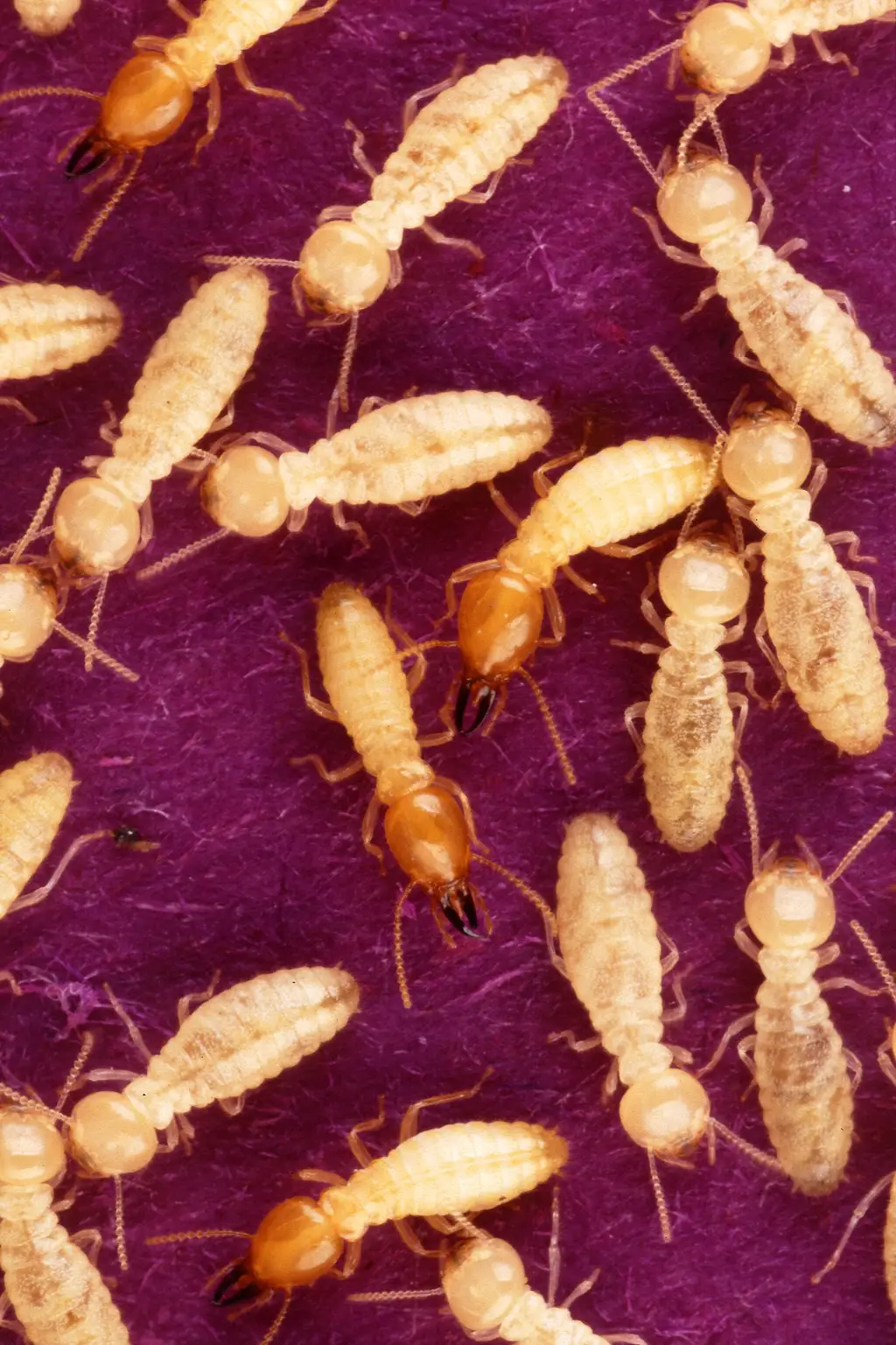
Frass. Drywood termites keep their galleries clean by pushing waste pellets out through kick-out holes. The result looks like coarse sawdust or ground pepper, piled under eaves, window frames, or attic framing. The tell: sweep it up, and a fresh pile appears within days. Sawdust doesn’t replenish itself.
Hollow-sounding wood. Both species eat wood from the inside out, leaving a thin shell. Tap along fascia boards, door frames, and baseboards with a screwdriver handle. Sound wood knocks. Eaten wood thuds, and a probe may sink right in.
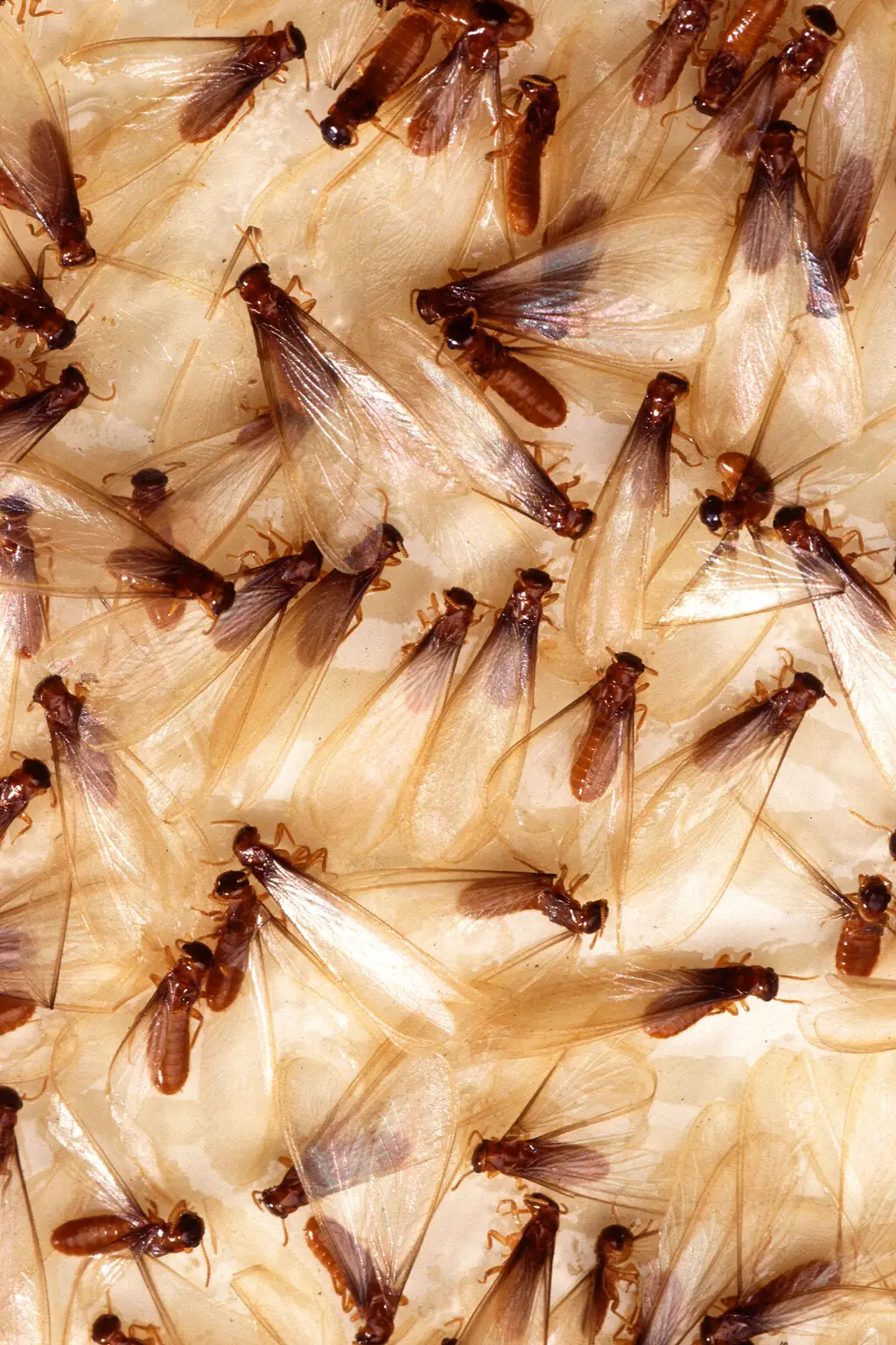
Swarmers. Winged reproductives fly to start new colonies. Outside, a swarm means a colony lives somewhere nearby. Inside the house, it means the colony is in the house.
Discarded wings. Swarmers shed all four wings shortly after landing. Piles of same-size silvery wings on windowsills, in spiderwebs, or around light fixtures are often the only trace a swarm leaves.
Blistered paint and sagging floors. Galleries near the surface make paint bubble and lift, and a subfloor eaten from below develops soft, low spots you feel underfoot before you see anything.
Sticking doors and windows. Damaged framing shifts, and the moisture subterranean termites carry swells the wood around it. A door that suddenly drags in a house that never had that problem deserves a look, especially alongside any other sign on this list.
A note on combinations. One sign can have innocent explanations: a sticking door might be summer humidity, and blistered paint might be a bad prime coat. Two signs together, wings on the sill and a soft baseboard below it, stop being coincidence. The more items from this list a house shows, the less the question is “if” and the more it’s “where and how far.”
Saw one of these? Schedule the free inspection and know for sure.
What to do if you found one
Leave the evidence alone. Tubes, pellet piles, and damaged wood are exactly what an inspector reads to identify the species and trace the activity, so scraping tubes off or vacuuming the frass destroys information you already paid for in damage.
The one thing worth collecting is swarmers. Drop a few in a zip-top bag, or take a sharp photo next to a coin for scale, and note the date and where they came out. Species identification from a good sample is fast and certain.
Then have it looked at. The free termite inspection covers the whole house, not just the spot that worried you, and ends with a written report either way. If it’s nothing, you’ll know. If it’s termites, you’ll know which kind, how far they’ve gotten, and what fixing it actually involves.