When Is Termite Swarm Season in Bakersfield, CA?
Termite swarm season in Bakersfield runs on two clocks. Subterranean swarmers fly in spring, on warm windless days, and again after the first soaking rains of fall. Drywood swarmers wait for the late-summer heat, roughly August through October, and favor warm evenings. If winged insects just poured out of a wall, the calendar alone gives you a strong first guess at the species.
Understanding what a swarm is takes the mystery out of it. A termite colony spends years growing before it can afford to reproduce. Once mature, it sends out swarmers: winged males and females whose only job is to fly a short distance, pair up, shed their wings, and start a new colony. Most die within a day. The swarm is over in an afternoon.
Here’s the part that matters: a swarm is a birth announcement from an established colony. Swarmers indoors mean a mature colony in or under the house, one that’s been there for years. That’s not a reason to panic, since the colony was there yesterday too. It’s a reason to book the free inspection while the evidence still shows where they came out.
The swarm calendar, by season
- 1
Spring warm-up
Subterranean swarmers fly on the first stretch of warm, still days, often after a rain.
- 2
High summer
Mostly quiet for swarms, while colonies feed hard through the heat.
- 3
Late summer into fall
Drywood swarmers ride the hottest evenings of the year, August through October.
- 4
After the first fall rains
A second subterranean flight follows the first soaking storms of the season.
Which species is flying, and is it even a termite?
The climate triggers behave differently because the species live differently. Subterranean colonies sit in the soil, so they respond to soil conditions. Bakersfield’s spring warm-up wakes them first, and the first real storms of fall, wetting ground that’s been baked since May, trigger the second flight, often the very next warm afternoon. Drywood colonies live in dry wood, no soil contact, and their swarmers ride the peak heat of late summer instead.
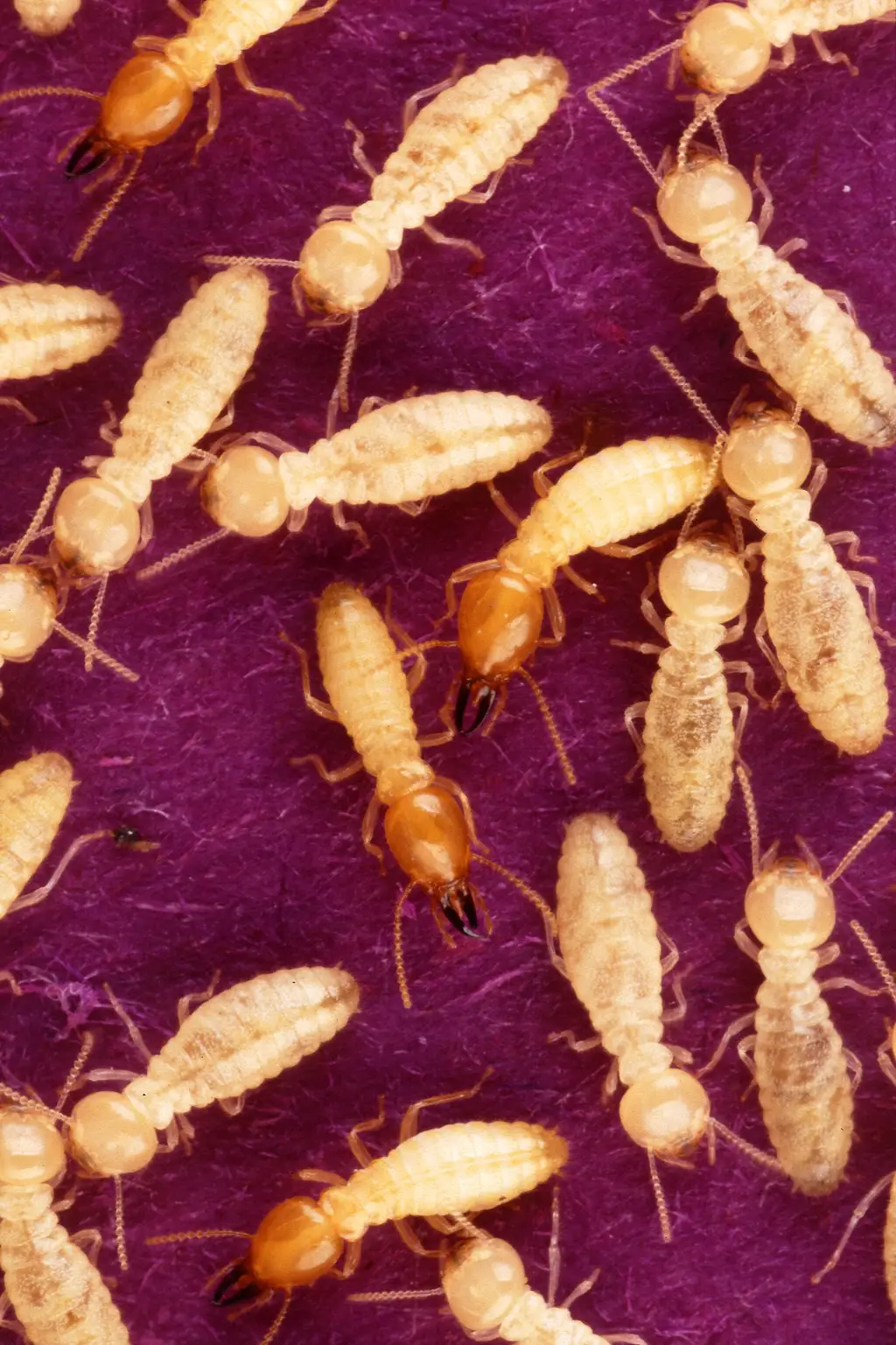
Before any of that matters, rule out the great impostor: flying ants, which swarm on the same warm days and cause most false alarms. Three features separate them, and you only need one clear look. Termite swarmers have straight, beaded antennae, ants have elbowed ones. Termites carry four equal-length wings, ants have big front wings over small back ones. And termites are thick-waisted, a straight tube, while ants are pinched in the middle like an hourglass.
Wings on the windowsill weeks later tell the same story, since termite swarmers shed theirs and ants mostly don’t. Size and color help too: subterranean swarmers run small and dark, while drywood swarmers are a touch larger with a reddish-brown head end. The full signs-of-termites guide puts wings and swarmers alongside the other five signs worth checking after a flight.
Swarmers indoors? Schedule the free inspection while the evidence is fresh.
What to do while it’s happening
Don’t spray. It feels productive and accomplishes nothing. The swarmers you kill were going to die today anyway, and the colony that produced them, the actual problem, is untouched behind the wall. Spraying just destroys the evidence.
Collect instead. Scoop a few swarmers into a zip-top bag, or take a sharp, close photo before they scatter. Note the date, the time of day, and exactly where they emerged: a floor register, a window frame, the garage slab. That emergence point is gold to an inspector, because it marks the colony’s location within a few feet.
Then let it wind down and book the look. Swarms end on their own within hours. What shouldn’t end with them is your follow-up, because the colony that swarmed this year will swarm bigger next year, and it’s eating in the meantime.