Why Homeowners Insurance Won't Cover Termite Damage
Does insurance cover termite damage? Almost never, and it’s better to hear that plainly now than from an adjuster later. Standard homeowners policies exclude damage from termites and other wood-destroying insects, and the exclusion isn’t fine print that varies much between carriers. It’s the industry’s default position.
The reasoning is blunt. Insurance exists for sudden, accidental losses: the tree through the roof, the burst pipe, the kitchen fire. Termite damage is neither sudden nor accidental in the insurer’s eyes. Colonies eat slowly, over years, and inspections can catch them at any point along the way. So carriers file termites under preventable maintenance, the same category as a roof that wore out or paint that peeled.
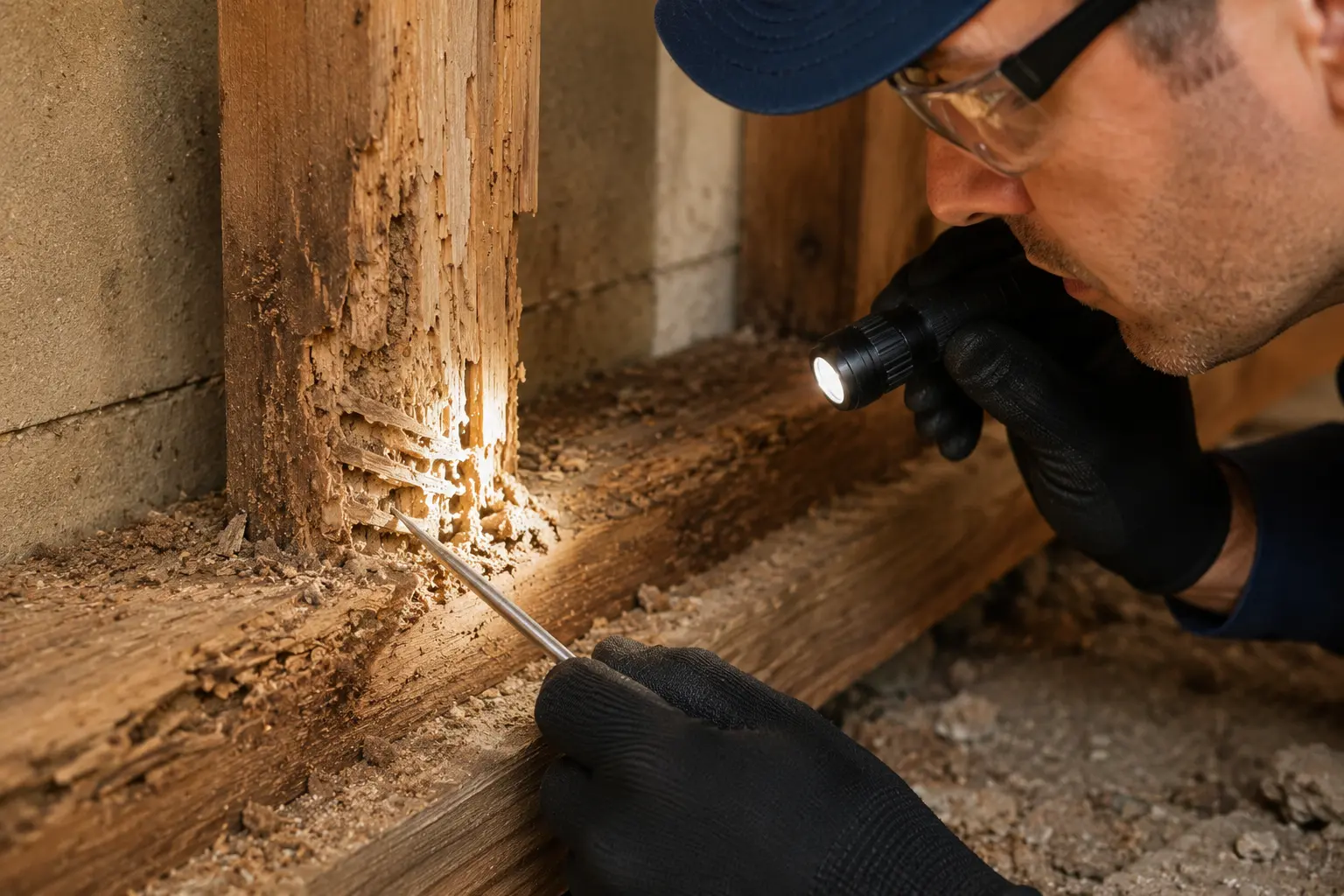
That leaves the repair bill where nobody wants it, with the homeowner. A colony found early might mean patching one fascia board. Found late, it can mean structural repair work measured in framing members. Nothing between those outcomes is insurance. It’s timing, which is why the free inspection is the closest thing to a termite policy this market sells.
The policy logic, without the legalese
Insurance contracts sort the world into two piles. Sudden and accidental goes in the covered pile. Gradual and preventable goes in the excluded pile, and that second pile holds wear, rot, settling, rodents, and insects. Termites land there because a colony takes years to do real damage, and because the industry’s view is that a diligent owner had years of chances to catch it.
There are narrow edges worth knowing about, described here carefully. If a covered event and termite damage tangle together, say a wall collapses and investigation finds both storm damage and termite-weakened framing, coverage questions get argued case by case, and outcomes vary. Some policies also treat certain collapse scenarios differently from ordinary damage. These are exceptions that adjusters and lawyers work out on the specific facts. Nobody should renovate a budget around them.
The same logic explains a related surprise: the damage discovered during a home sale isn’t covered either, no matter how sudden the discovery felt. The insurer’s clock runs on when the eating happened, not on when the escrow inspector found it.
To be explicit: this page is general information, not legal or coverage advice. Policies differ, states differ, and the only answers that bind anyone are in your policy’s own language. Read the exclusions section, and put the question to your insurance agent directly. What this page can tell you is what usually happens, and what usually happens is a denial.
The practical insurance is catching it early. Schedule the free annual inspection.
What actually protects the house
With no policy backstopping termite damage, protection means not letting damage accumulate. Three habits do the real work.
Get the house looked at on a rhythm. A periodic inspection, free for Bakersfield homeowners, is the single highest-leverage move, because every termite outcome gets cheaper the earlier it’s found.
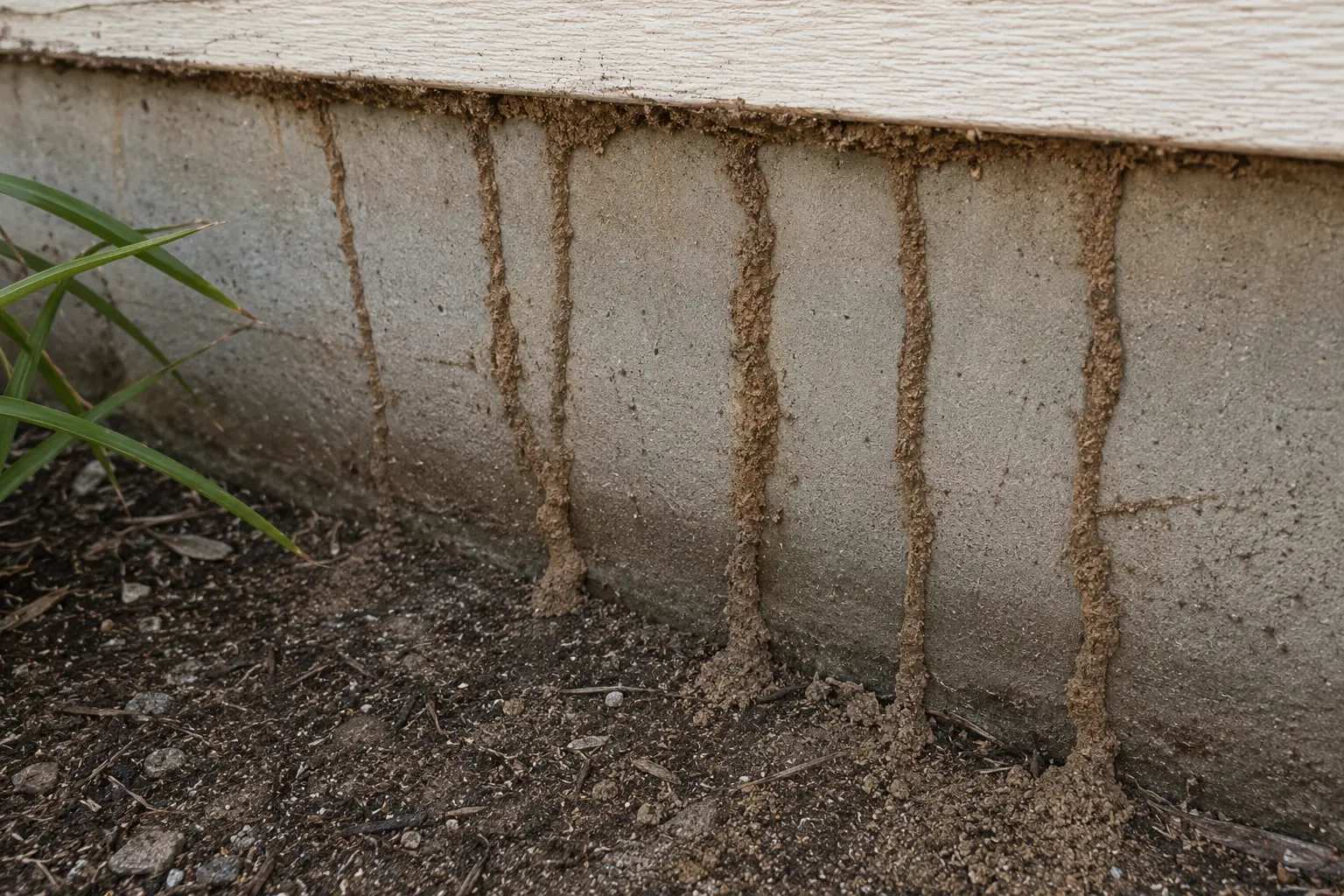
Control the moisture. Subterranean termites follow damp soil, so keep sprinklers off the stem wall, fix hose-bib drips, and don’t let planters or mulch pile against the siding. Store firewood off the ground and away from the house. None of this costs much, and it removes the conditions that inspectors flag over and over. In an irrigated town like Bakersfield, where yard watering is what keeps colonies alive through the dry months, moisture discipline counts double.
Repair early, while it’s carpentry instead of construction. A soft windowsill handled this year is a small wood repair job. The same sill ignored until escrow becomes a Section 1 finding with a deadline attached. The out-of-pocket math only runs one direction: early detection and small fixes, or late discovery and large ones. Choosing the first one is the whole strategy.