Termite Control in Shafter, CA
Shafter is farm country, and that fact shapes its termite pressure more than anything about the houses themselves. The town sits inside a grid of almonds, pistachios, and row crops that get watered most of the year, so the soil around town never dries out the way unirrigated valley ground does. Subterranean termites live and die by soil moisture. Around Shafter, they get a subsidized habitat: colonies don’t have to huddle near a leaky hose bib to survive August, because the whole edge of town stays workable for them.
Shafter’s two housing generations fail in two different ways. Old Shafter, the blocks around the downtown core, carries pre-war and mid-century homes, a good number on raised foundations with piers and crawl spaces where tubes climb in the classic way. The new growth is the opposite: slab-on-grade subdivisions built over the last two decades as the town boomed, stucco over wood frame. Slab homes hide their termites well. Entry happens through shrinkage cracks and plumbing gaps inside the walls, so the first visible sign might be a blistered baseboard two years after the colony moved in.
Either vintage gets the same first step: a free termite inspection that reads the evidence and names the species. In Shafter that answer comes back “subterranean” more often than anywhere else in the coverage area, and the evidence that prompts the call is usually a mud tube on a garage stem wall or a swarm rising off wet ground after the first fall storm. The home page explains why that species answer has to come before anyone talks methods or money, and nowhere does the rule earn its keep like a town where the soil never goes dry.
What Shafter calls for, most of the time
Soil-line work is the workhorse here. Liquid barriers and baiting systems, the subterranean side of the treatment lineup, fit both housing generations, and bait stations particularly suit the newer tracts, where nobody wants a finished yard trenched. On slab homes, the job often includes drilling where a patio or driveway meets the house, so the treated zone runs unbroken under the concrete instead of stopping at its edge.
Escrow WDO reports are the other steady need. Shafter’s subdivisions turn over often, and closing timelines don’t care whether the house is three years old or seventy. New-construction buyers tend to assume a young house means a clean report, and it usually does, but “usually” is doing real work in that sentence when farmland borders the fence line.
Coverage is straightforward. Shafter is roughly a 20-minute run from the Bakersfield base up Highway 43 or 99, close enough to book like an in-town job. Free homeowner inspections apply in Shafter on the same terms, old downtown or new subdivision alike.
Our Services
-
Termite Inspections
A trained inspector checks the attic, crawl space, eaves, and foundation, then tells you plainly what's there.
Learn more
-
Termite Treatment
Spot treatments, soil treatments, and whole-structure options, recommended based on what the inspection actually finds.
Learn more
-
Whole-House Fumigation
Tent fumigation reaches drywood termites everywhere in the structure. It's the thorough fix for widespread infestations.
Learn more
-
No-Tent Drywood Treatment
Targeted drywood treatment without the tent. When the infestation is accessible, you stay in your home while we work.
Learn more
-
Subterranean Termite Treatment
Soil-dwelling colonies stopped at the ground they come from, with liquid barrier and baiting treatments.
Learn more
-
Heat Treatment
Whole-structure or single-room heat that kills drywood termites without fumigant chemicals or an overnight stay elsewhere.
Learn more
Areas We Serve
- Bakersfield
- Oildale
- Shafter
- Arvin
- Lamont
- Taft
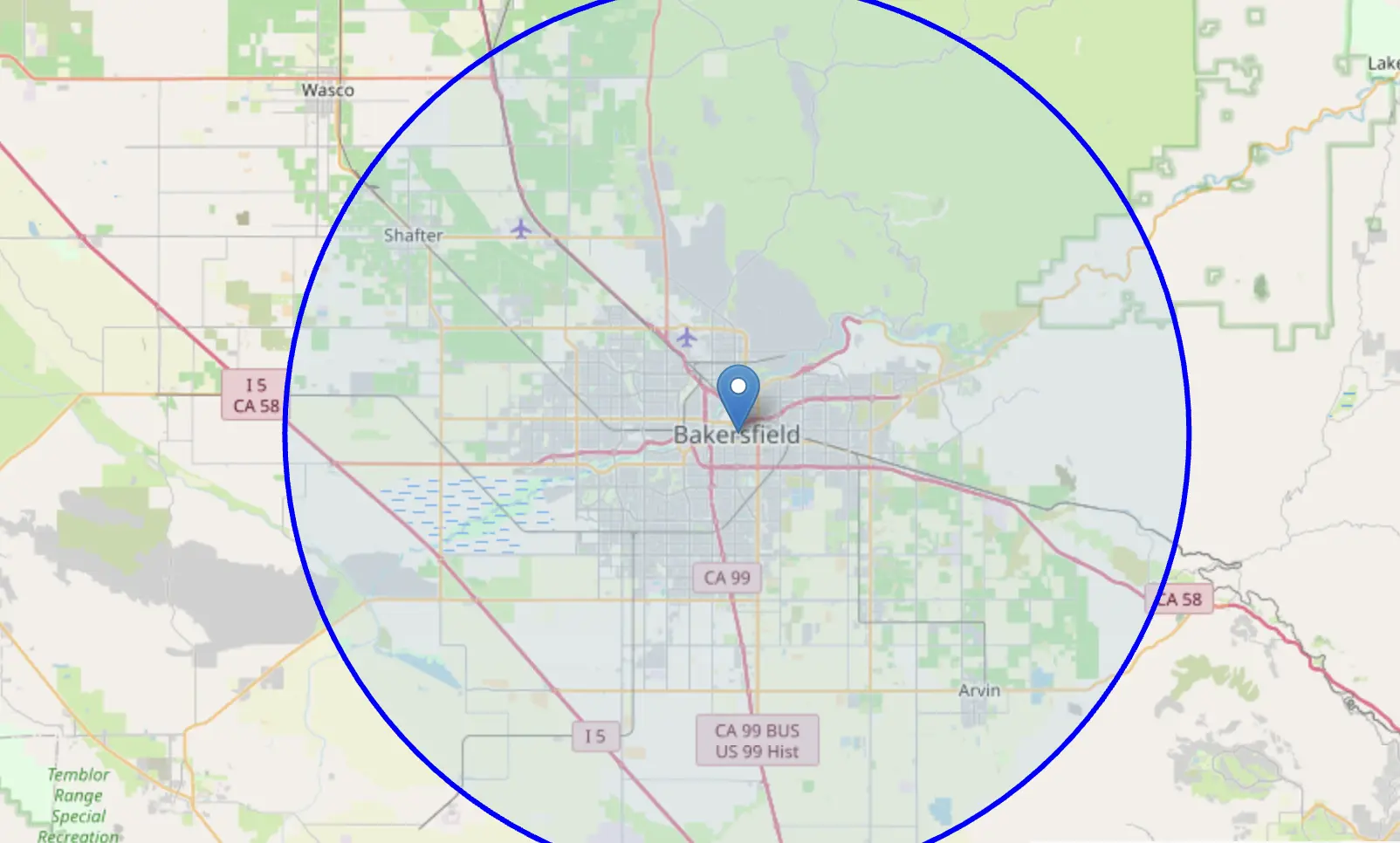
Find local details for each community on our service-area pages.
Frequently Asked Questions
Does all the irrigation around Shafter increase termite risk?
It's the main driver. Subterranean termites need damp soil, and between orchard irrigation outside town and lawn watering inside it, Shafter's ground rarely dries out at foundation depth. Colonies here stay active straight through summer.
My Shafter house is nearly new. Can it really have termites?
Yes. New slab homes get subterranean termites through settling cracks and plumbing penetrations, and the surrounding farmland keeps colony pressure high. Newness buys time, not immunity.
How far is Shafter from the Bakersfield base?
About 20 minutes up Highway 43 or 99. Scheduling works the same as in Bakersfield, and homeowner inspections are free.